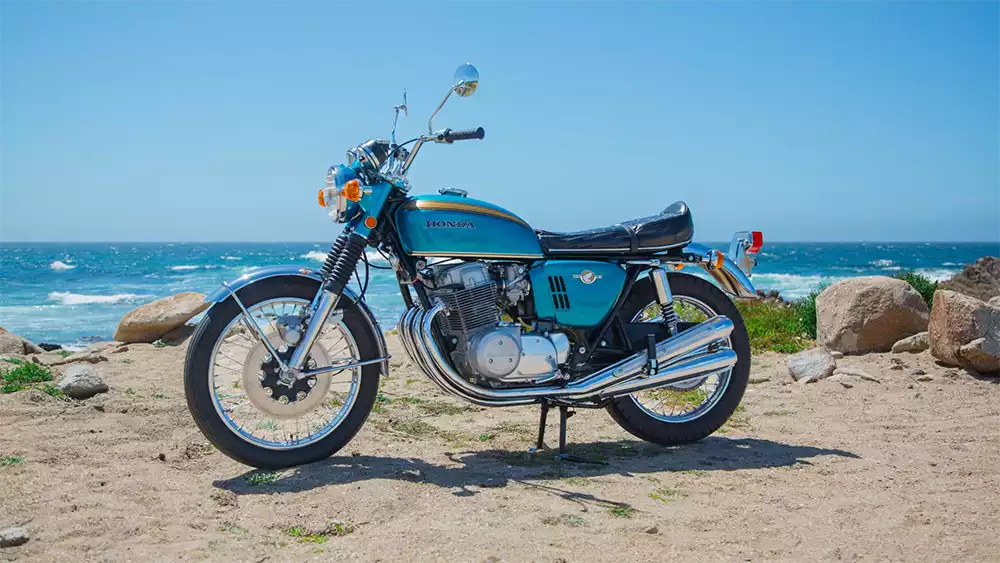
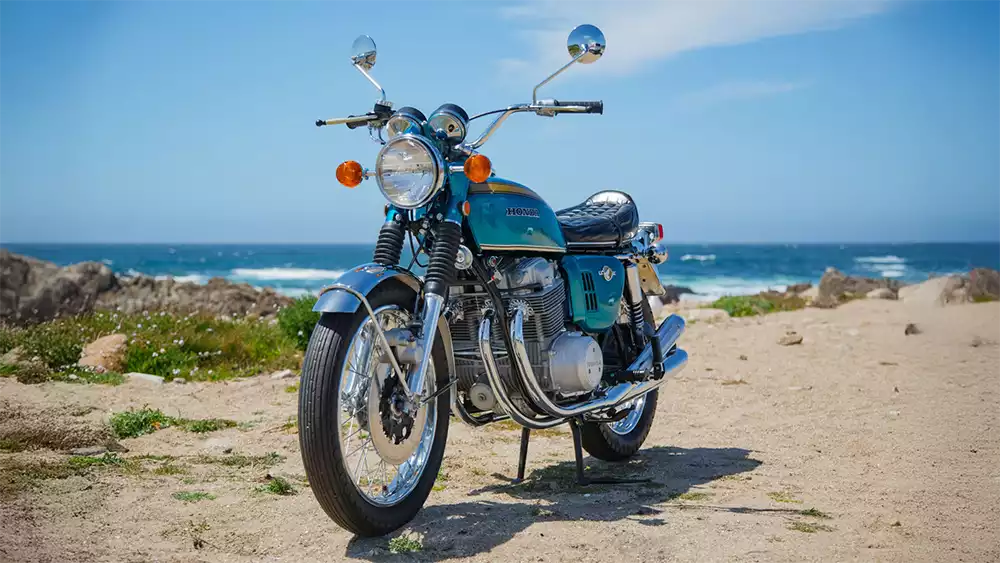
A one-of-a-kind 1968 Honda CB750 prototype just shattered records. Last month at Mecum’s Las Vegas auction, this ultra-rare bike sold for $313,500—making it the most expensive Japanese motorcycle ever sold, according to Hagerty. The jaw-dropping price reflects just how significant this early production model is to motorcycle history.
The True Pioneer of the CB750 Legacy
Few motorcycles can claim to be true firsts, but this one can. Built in October 1968, this CB750 Sandcast Prototype was the original CB750 sent to American Honda—used to test the revolutionary 4-cylinder engine and build anticipation for its public debut. It predates the four pre-production samples that arrived for the January 1969 Dealer Convention in Las Vegas, making it the true pioneer of the CB750 legacy.
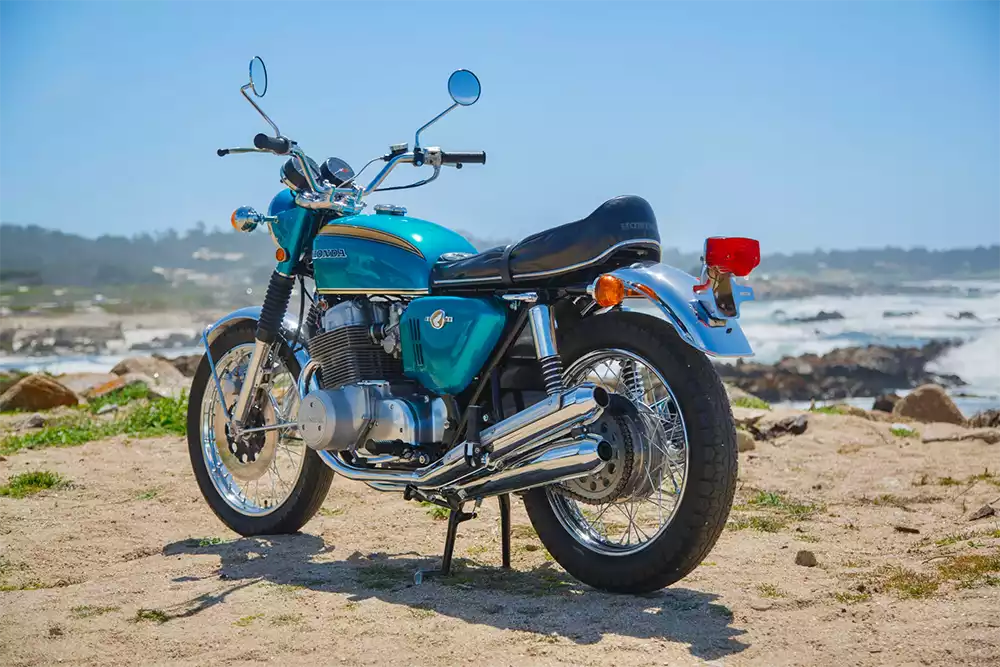
While the four pre-production samples closely mirrored the production bikes that would follow, this 1968 prototype stands apart as a singular, hand-built masterpiece. Not a single component carries over to those later samples. The design is distinct, the functionality is unique, and even when you compare it to the final production model, the resemblance is only superficial. This is a machine unto itself.
A Restoration That Revealed History
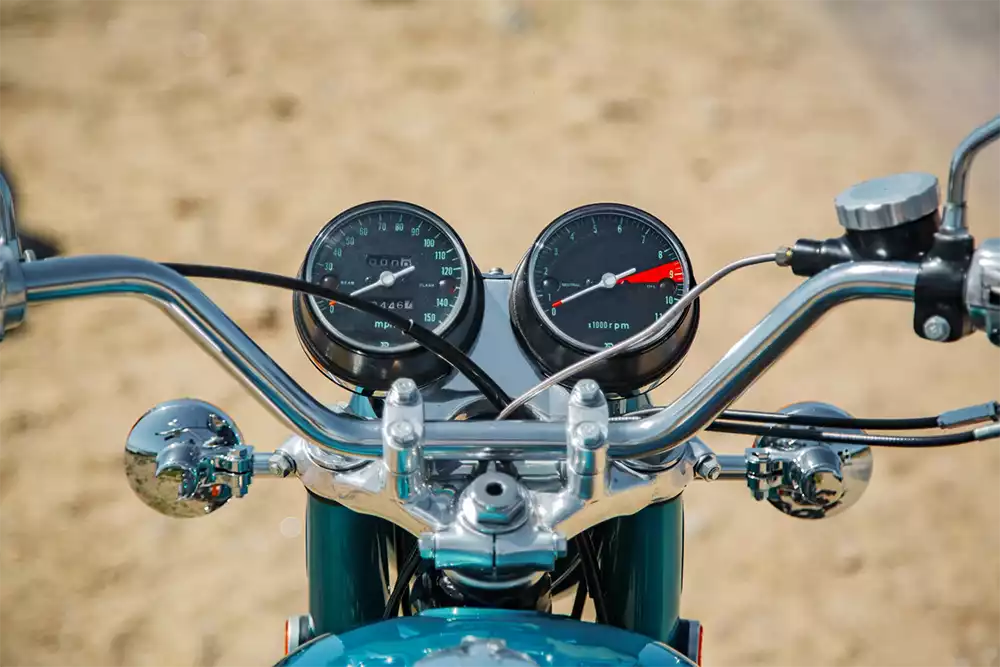
Vic World acquired this motorcycle in the mid-1990s and restored it at World Motorcycles in San Bruno, California. The restoration revealed numerous experimental features that document Honda’s design process.
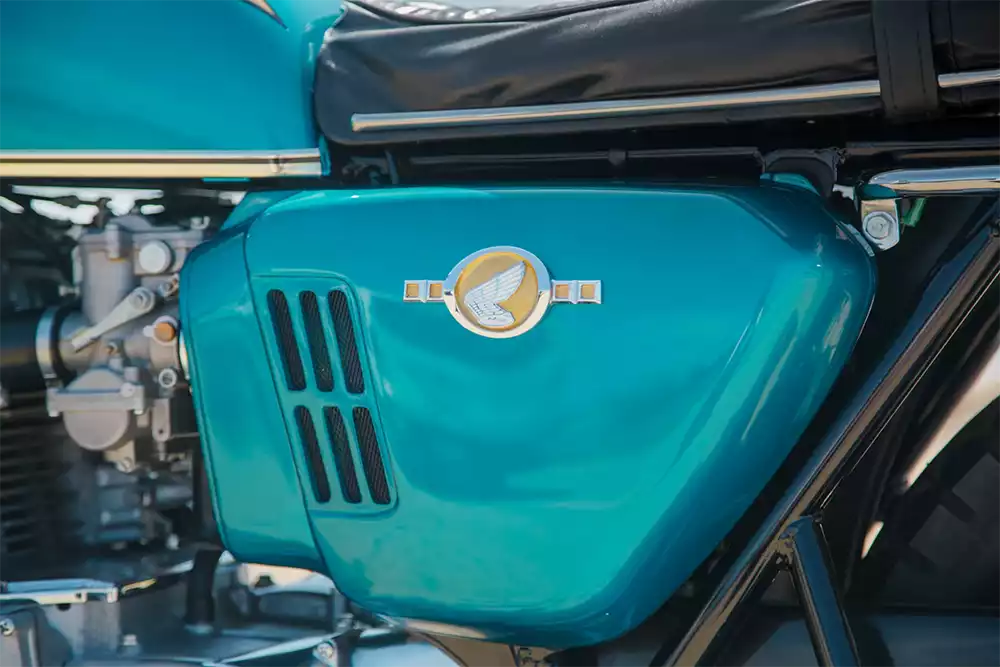
The side covers are asymmetrical, with a shorter right cover exposing the airbox and an extended left cover concealing it. The valve cover is cast with “HONDA” rather than the later “OHC 750” marking. The sand-cast front brake master cylinder features minimal fluid capacity, a steel line, and an inward slant—evidence of Honda’s early exploration of disc-brake technology for motorcycles.
Unique Engineering: The Rear-Hinged Seat
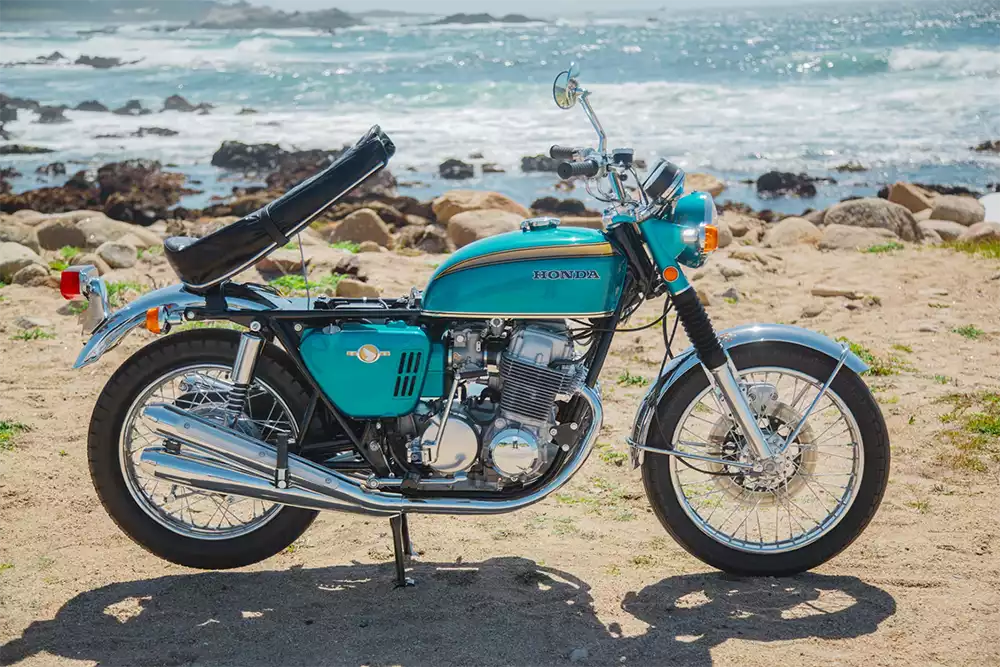
This prototype is the sole CB750 ever made with a rear-hinged seat that flips up from the front. Beyond this distinctive feature, the vast majority of its components differ from production CB750s. The only notable exception is the handgrips. The engine itself is narrower than production units, beginning with a billet crankshaft—a fundamental difference that extends throughout the powertrain.
The “Unconventional” Carburetor Setup
One of the clearest examples of Honda’s trial-and-error development is the carburetor setup: a set of four one-off, sand-cast Keihin units that bear little resemblance to those on production CB750s. Notably, these prototype Keihins share a single float chamber between every two carburetors.
The carburetors are Honda’s experimental blueprint made visible. Four one-off, sand-cast Keihin units—nothing like what ended up on production CB750s. The kicker: they share float chambers in pairs. It’s unconventional, it’s weird, and it’s exactly what you’d expect from a company still figuring out how to build the perfect four-cylinder motorcycle.
A Record-Breaking Sale
The CB750 sold for a whopping $313,500, making it the priciest Japanese motorcycle ever and one of Honda’s most expensive rides of all time.
See the full lot listing at Mecum Auctions.
Related Reading:
While this $313k prototype is a piece of history, the CB750 also makes an incredible platform for custom builders. Check out two of our favorite builds by Clockwork Motorcycles: the darkened 1978 Honda CB750 Ultra-Noir and the sleek Honda CB750 Phantom.