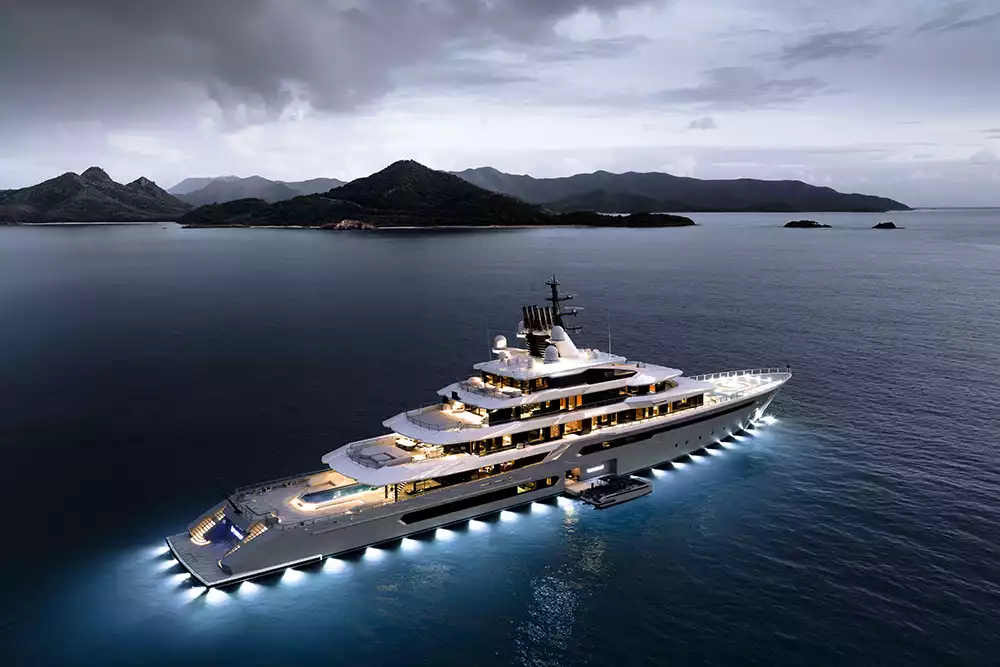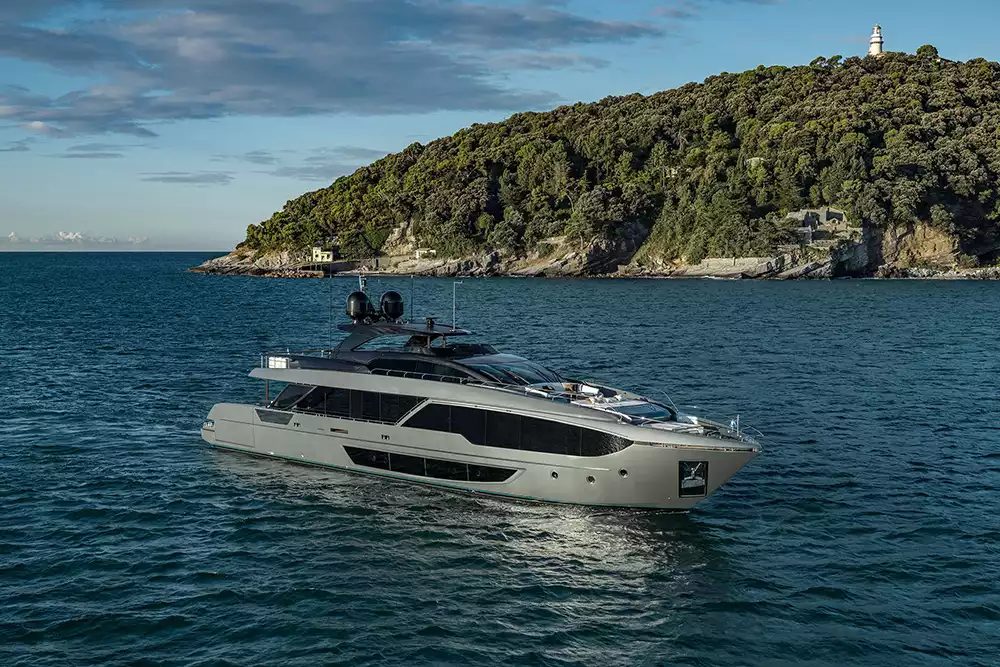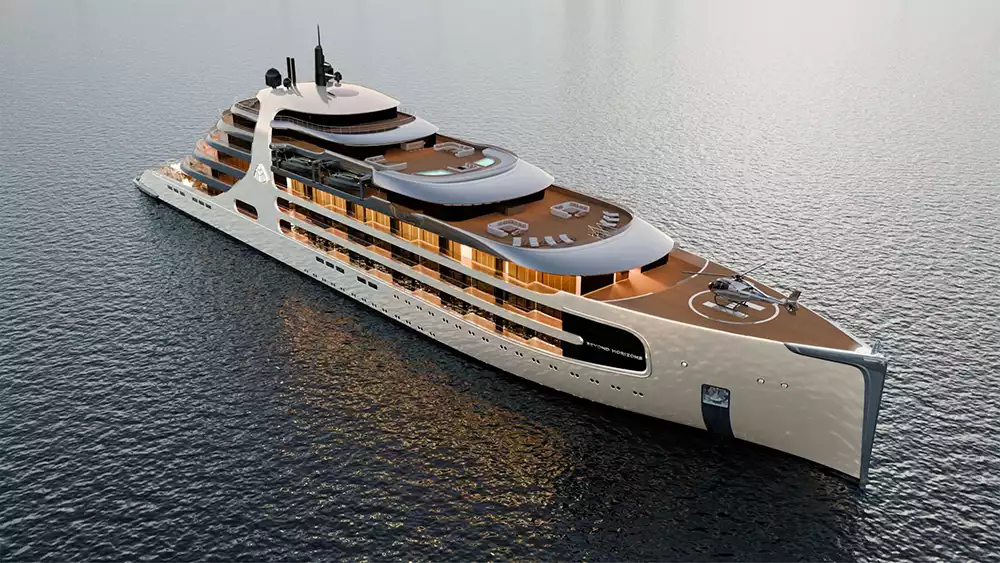
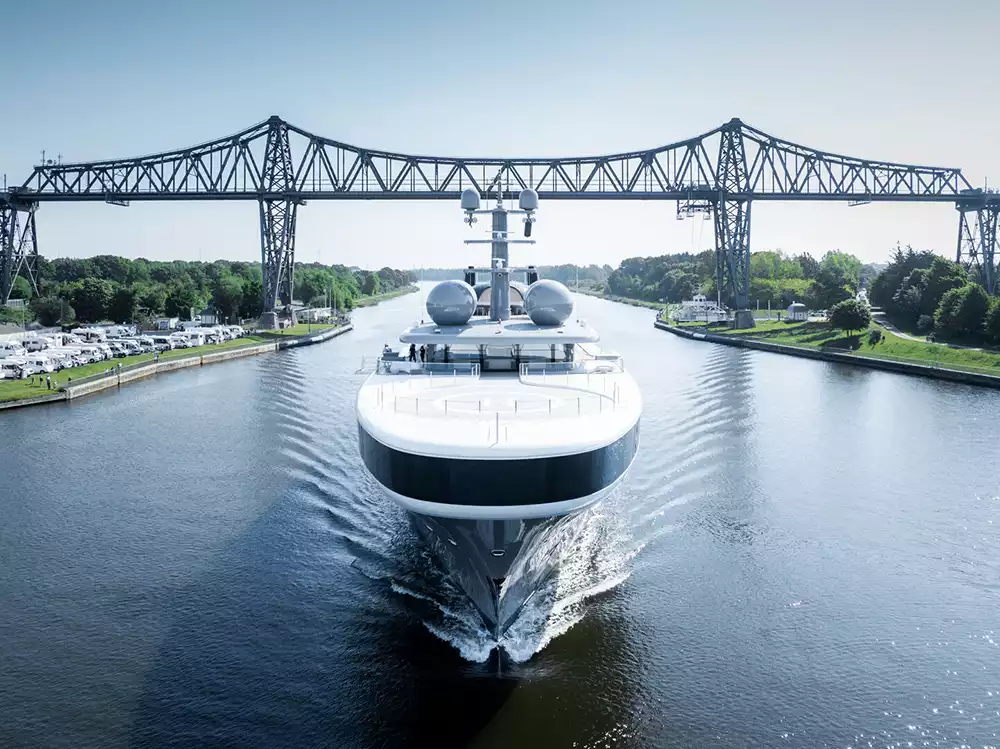
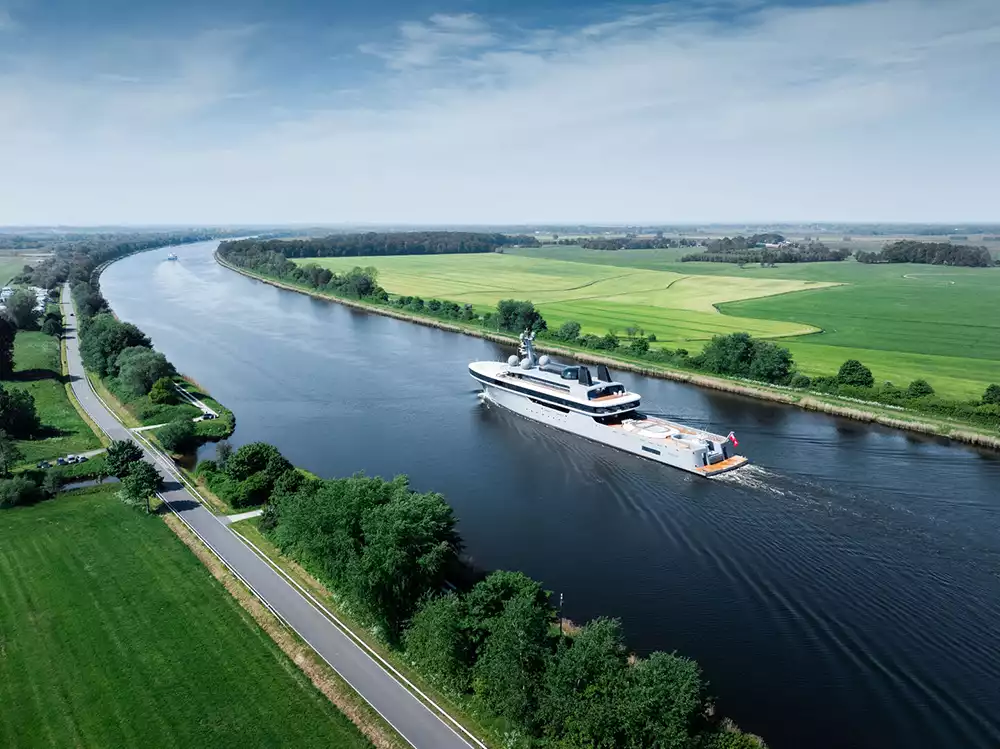
Lürssen’s closely guarded Project Cosmos culminates in Nausicaä’s delivery: a 374-foot superyacht that redefines the segment. The vessel reflects the complete design direction of Australian industrial designer Marc Newson, establishing a new benchmark in its class.
Commissioned by Japanese billionaire Yusaku Maezawa, the yacht bears the name Nausicaä, which in Ancient Greek means “burner of ships.” Marc Newson was granted extraordinary creative liberty, enabling him to reimagine the hull and superstructure with fresh perspectives that maximize both deck space and interior accommodation.
A Newson-Designed Masterpiece
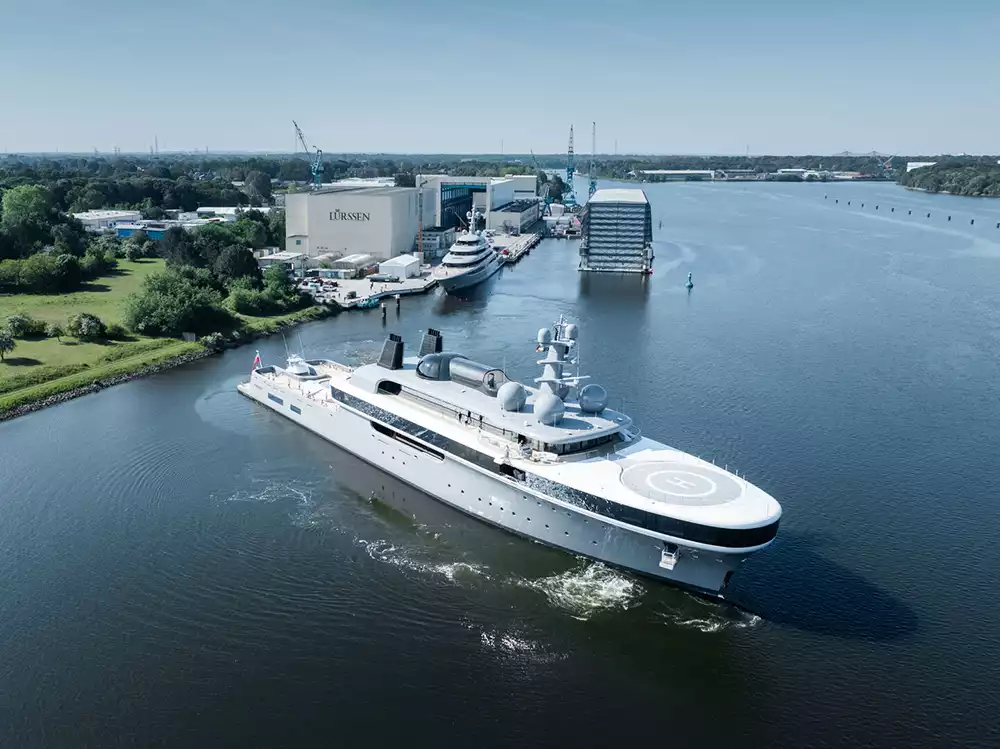
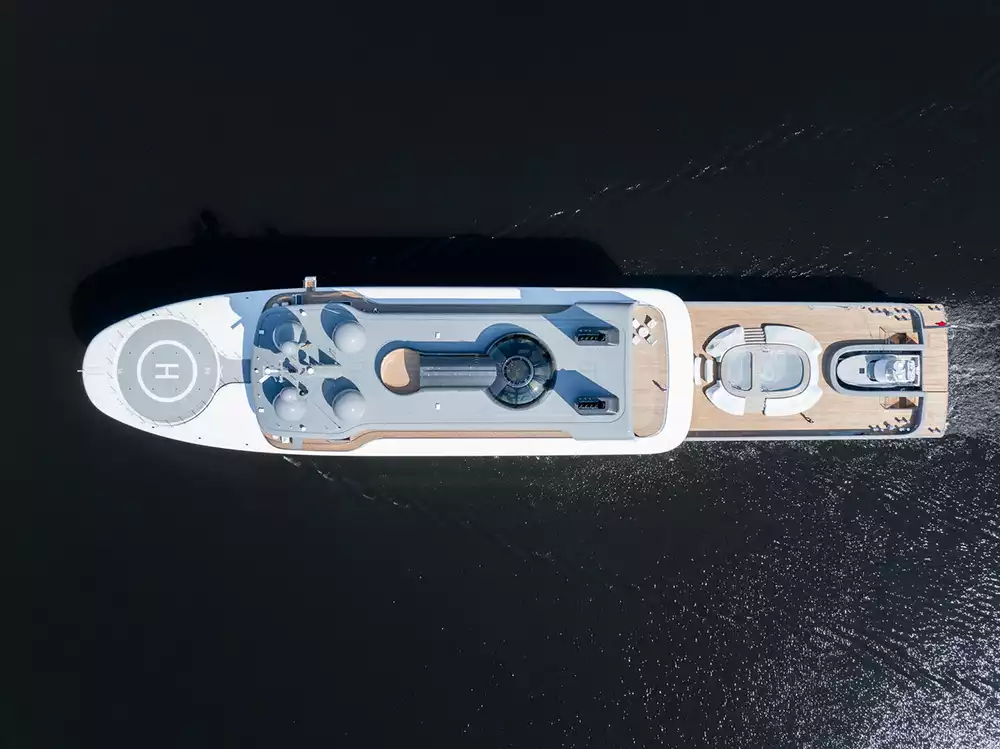
The vessel is instantly recognisable as a Newson design, defined by the simplification of complex technical elements into clean, graphic forms, including the four radar spheres above the bridge. It also embodies Newson’s trademark ability to translate conceptual design into a fully functional object, a principle seen throughout his work in watches and car design.
‘It is extremely challenging for a design project, of any description, to literally deliver on the vision conceived and presented at concept stage,’ Newson acknowledges. ‘Here, I am very proud to say that every detail, at every scale, has been realised at the most coherent level. Working with an immensely creative client has enabled rare opportunities to push the boundaries and test the limits of form, material and functionality.’
The Skydome: Engineering and Glass Innovation
Perhaps the most striking feature is the Skydome on the upper deck—a breathtaking glass structure composed of seven massive curved panes. Each panel measures 3 metres by 2.8 metres, is 62 millimetres thick, and weighs a hefty 1,050 kilograms. Anchoring the owner’s office suite, the Skydome is equipped with bespoke bronze shutters that allow the owner to retreat from the world outside, while a private sky terrace extends the experience even further.
Each Skydome pane was hot-bent using gravity under strict process controls. Before manufacturing any production panels, the technique underwent rigorous validation through full-scale 1:1 prototype testing, including multiple bending and lamination trials.
According to Peter Lürssen, CEO of Lürssen, the Nausicaä exemplifies the company’s commitment to glass innovation: “Glass innovation has been a Lürssen hallmark for years. From Rising Sun to Kismet and now Nausicaä, we keep extending the limits of scale and structural complexity to craft spaces that are striking yet practical for our clients. It’s uncommon for a contemporary Lürssen yacht not to set a new standard in glass engineering.”
Interior Design and Art Gallery Concept
The superyacht features a two-level atrium instead of a main saloon. The main deck is an art gallery with custom pieces and a large sculpture, fitting for an owner known for his high-profile collection of works like Jean-Michel Basquiat’s Untitled, which has previously fetched record sums at auction.
A circular upper-deck gallery overlooks the atrium, while the upper aft area includes a sushi bar, table tennis, and inlaid seating. Every detail is custom designed by Marc Newson. Across six decks, the aft section spans 18 metres, with a Jacuzzi and pool for laps and diving.
Sustainable Propulsion and Future Tech
In terms of propulsion, Nausicaä boasts a five-engine diesel-electric plant—comprising two primary and three auxiliary engines—driving fully electric Azimuth pods. The battery plant delivers up to 2MW, sufficient to power all hotel systems simultaneously at peak load, while allowing silent operation and zero local emissions for extended periods. The yard confirmed the completion of her trials in December. At the owner’s request, the yacht features provisions for a fuel-cell system that converts methanol into hydrogen to generate electricity. “While this is an emerging technology in yachting, it is happening. And when it does, its integration will mark a major step away from traditional fossil fuels in large-yacht propulsion,” Lürssen stated.
“The delivery of Nausicaä has given me a profound connection to my great-grandfather, Friedrich Lürssen, who built the world’s first motorboat in 1886,” says Peter Lürssen. “I am incredibly grateful for that. While innovation drives everything we do, Nausicaä has truly broken new ground, just as the 6-metre Rems did 140 years ago.”